
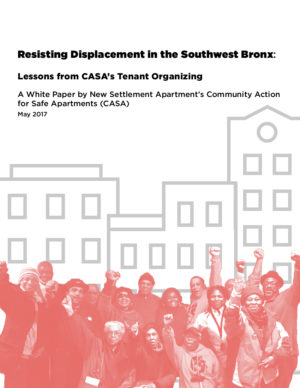
Resisting Displacement in the Southwest Bronx: Lessons from CASA's Tenant Organizing
This white paper presents a clear and accurate definition of displacement to counter the false assertion that most tenants leave neighborhoods by choice.
This white paper presents a clear and accurate definition of displacement to counter the false assertion that most tenants leave neighborhoods by choice.
This discusses Participatory Action Research principles used by TakeRoot, explores the applicability of these principles to the Participatory Budgeting research context, and explains how these practices have helped to deepen and improve the process and outcomes of PBNYC.
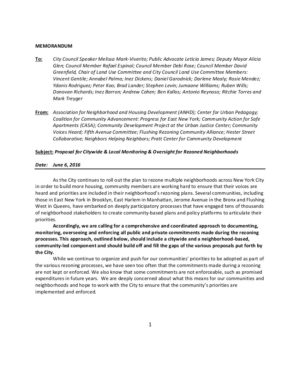
This memo is a proposal calling for a more comprehensive and coordinated approach to documenting, monitoring, overseeing and enforcing all public and private commitments made to communities during the rezoning processes.

Annual Review of the Research and Policy Initiative - 2015

Summary Participatory budgeting (PB) is a unique civic engagement process which allows community members—instead of elected officials alone—to determine how public funds should be spent, from start to finish. Four years ago, in 2011-12, a pilot process in four City
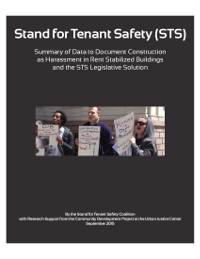
The Community Development Project in partnership with the Stand for Tenant Safety coalition released this report documenting aggressive construction in occupied buildings and how it is used as a tool to displace rent-regulated New York City tenants.
This report includes a set of policy recommendations focusing on four principles for the development of Jerome Avenue: Real Affordable Housing, Good Jobs and Local Hire, Strong Anti-Harassment and Anti-Displacement Policies, and Real Community Participation.
The following report lays out principles for an equitable rezoning and specific rezoning policies that would fulfill the principles. Both the principles and rezoning policy recommendations were developed with and by Chinatown residents and business owners, and through numerous discussions